
August 26, 2024
 by
Marta Schluneger, Senior Marketing Manager
by
Marta Schluneger, Senior Marketing Manager
by
Marta Schluneger, Senior Marketing Manager
by
Marta Schluneger, Senior Marketing Manager

Most C-suite can define security posture. Far fewer can tell you whether their own is any good.
That gap is where careers end.
Security often doesn’t reach the boardroom until something breaks. Even when it does come up, you nod along when your CISO walks the board through the quarterly update. And you probably believe that's enough, because for a long time it was.
It isn't anymore.
New regulations have moved the responsibility onto you personally.
NIS2 and DORA now make C-suite directly liable for cybersecurity failures. Directors can face personal fines and disqualification from management positions.
The old shield, where the corporation absorbed the blame, is gone. Ignorance no longer counts as a defense. As Mikko Hypponen puts it:
So passive understanding is a trap. It feels like diligence. It looks like diligence in a boardroom. But it leaves you unable to answer the only question that matters.
“Is our security posture strong, or does it just sound strong when someone briefs me on it?”
When you take a security update, you're evaluating the messenger, not the message. Your security lead or IT partner say things are under control, and you have no independent way to test that claim. You're trusting a summary of a summary.
Evaluation is different.
It means you can ask questions that expose whether the posture holds up, and you can recognize a weak answer when you hear one.
You don't need to become technical to do this. You need the right questions, anchored to the three things that determine your exposure:
Get those three right and you can pressure-test any briefing you receive.
Your attack surface is every digital point where someone could break in. Here are some examples:
It grows every time your team adopts a new app, hires a remote worker, or migrates something to the cloud.
Understanding this is table stakes. Evaluating it means asking one uncomfortable question.
Most organizations can't see all of it. Companies that run external attack surface management (EASM) tools typically discover 30 to 40 percent more vulnerable assets than they knew existed.
Consider what that number means.
If a third of your exposure was invisible to you until a tool went looking, then every briefing before that was built on incomplete information. You can't make a risk decision about an asset you don't know exists.
So your first evaluation question is not "are we secure." It's "how confident are we that we've found everything, and how do we know?"
If the answer is a penetration test from last year, that's a snapshot, not visibility.
If the answer is continuous discovery that includes employee credential exposure, not just servers and domains, you're closer to real coverage.
That last part matters more than most leaders realize.
Let’s say an employee signs up for a shopping site with their work email. That site gets breached. Now their password is exposed, and if they reused it for a company account, so is your front door.
Most security tools watch infrastructure and ignore the human layer entirely. Ask where yours stands.
You already run your business on numbers including revenue, margin, churn, and pipeline. Security has one too, and if you're not looking at it, you're flying blind.
A security score measures how vulnerable you look to an attacker. But knowing that a score exists is not the same as using it.
Evaluation means putting it on the same dashboard as your other KPIs and treating a bad number the way you'd treat a revenue miss. Because a low score isn’t only about risks, it’s also lost deals.
So ask your team or IT partner three things:
If you can't produce a number, that tells you how measurable your security really is.
C-suite who stop at understanding usually do so because action feels expensive and the threat feels abstract. Flip the math.
The average data breach now costs 4.88 million dollars. That's before you count idle staff, lost e-commerce revenue, emergency response fees, regulatory fines, and the customers who leave and don't come back.
A single day of downtime for 100 employees earning 40 dollars an hour burns 32,000 dollars in productivity alone, and that's the smallest line on the invoice.
Let’s take a look at the number that should reframe everything instead.
90 percent of breaches are preventable. Meanwhile, 60 percent of companies will face an attack in the next two years.
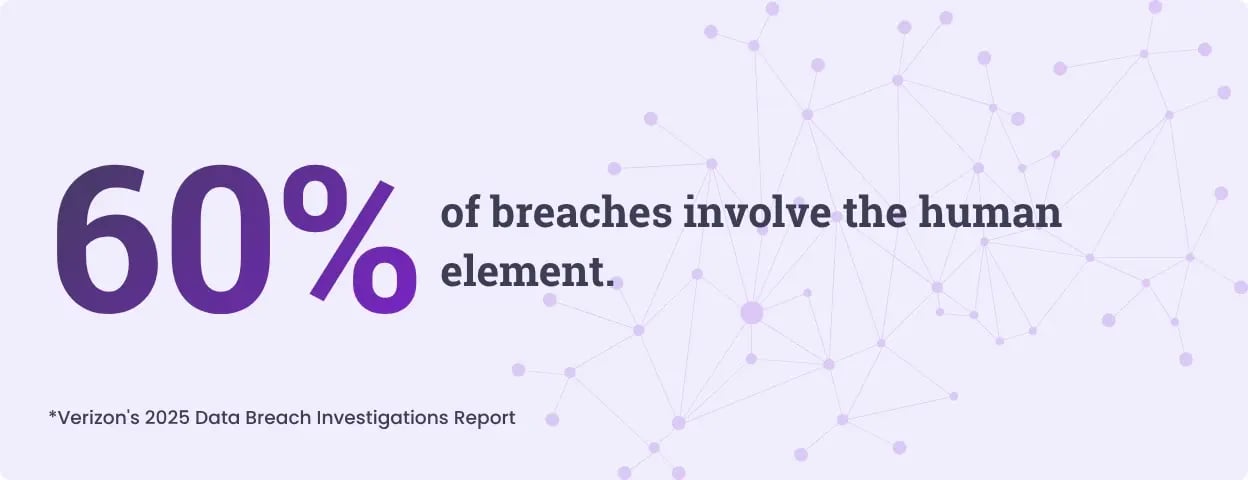
Your exposure is almost entirely a function of choices made in advance. Doing nothing is a decision, and it carries a price.
There are four mindset shifts that serve as the lens you evaluate your security:
Security creates value through risk reduction, compliance, and customer trust. When you weigh a security investment, ask what it protects and what it wins, not just what it costs.
The goal is resilience, the ability to detect, respond, and recover. Don't judge your posture by whether you've been breached. Judge it by how fast you'd recover if you were.
Your board doesn't care about patch percentages. It cares about revenue protected and operations kept running. Hold security to the same standard as everything else, a business outcome.
The real customer of your security program is your actual customer, the one whose data and trust you hold. That reframes every trade-off you make.
Understanding security posture makes you fluent. Evaluating it makes you responsible.
Before your next security conversation, work through these three questions:
1. Can you explain your organization's attack surface to your board, including the parts you can't currently see?
2. Do you know your security score today, and whether it's rising or falling?
3. Can you name which regulations put your own liability on the line?
If any answer is no, you've found your first action item. Don't wait for the next briefing to fill the gap. Ask the questions yourself. The point of all this was never fluency. It's judgment, and judgment is now part of your job.
Read or download our guide to understanding your digital footprint.